
USE CASE · U.S. PATENT LAW
Patent Protection in the United States
Anyone who wishes to protect an invention in the United States or further develop an existing U.S. patent portfolio must coordinate technical, formal, and strategic decisions early on. This applies both to a direct U.S. application and to entering the U.S. national phase of a PCT application.
We assist companies from Germany and the DACH region with U.S. patent applications and proceedings before the United States Patent and Trademark Office (USPTO). Matthias Schuhmacher and Raphael Tautz coordinate German-language support; Caleb Pollack and Brendan Mee contribute their experience in U.S. patent practice.
The Case at a Glance
Background
An invention is to be protected in the United States, or an existing portfolio is to be maintained with the USPTO.
Objective
Combine the scope of protection, procedural strategy, and economic significance of the invention into a robust U.S. patent application.
Support
German-speaking contacts coordinate technical information and U.S. procedural practices with the relevant U.S. team.
Your Situation
U.S. patent applications have their own requirements regarding the drafting of claims, the description, and the conduct of proceedings. Differences from the European procedure are evident, among other things, in patent eligibility under Section 101, novelty and non-obviousness under Sections 102 and 103, and the requirements under Section 112.
In addition, there are decisions regarding continuation and divisional applications, examiner interviews, potential appeals, and the coordination of multiple patent families. Without a unified strategy, this can lead to unnecessary costs, gaps in the scope of protection, or conflicting positions.
Our Support
We organize the invention documentation, align the U.S. patent application strategy with business objectives, and guide the process before the USPTO. We respond to Office Actions in collaboration with the technical experts; examiner interviews and other procedural steps are prepared on a case-by-case basis.
For existing portfolios, in addition to individual patent applications, we also consider continuation strategies, international coordination, patentability, freedom to operate, and due diligence issues. The appropriate examination and procedural approach depend on the technology, market, and portfolio.


Discuss U.S. Patent Strategy
Describe your invention, the ongoing USPTO proceedings, or your portfolio goals to Matthias Schuhmacher and Raphael Tautz. We’ll determine what documentation is needed and involve the appropriate members of the U.S. team.
Filing U.S. Patents and Developing Portfolios
Our support ranges from the initial filing to strategic management of larger portfolios. The specific components required depend on the technology, stage of development, and business objectives.
U.S. Patent Application and National Phase
Align the invention with the U.S. patent application strategy.
When filing a direct U.S. application or entering the U.S. national phase of a PCT application, the technical disclosure, claim structure, and deadlines must align. We review existing documents, clarify priorities, and coordinate the drafting process with the inventors and the relevant teams.
A U.S. patent application is not merely a translation of a European patent application. Its structure, claims, and potential future continuation applications should be considered early on. This creates a foundation that takes into account the examination process and the future development of the portfolio.
Office Actions and Examiner Interviews
Address the USPTO's objections from both a technical and legal perspective.
Office actions may concern, among other things, patent eligibility under Section 101, novelty under Section 102, non-obviousness under Section 103, or requirements under Section 112. We categorize the objections and work with the technical experts to develop a consistent response strategy.
An examiner interview can help clarify technical differences and potential amendments to the claims directly with the examiner. Whether and when such a meeting is advisable is determined based on the case file, the objections raised, and the desired scope of protection.
PTAB Appeals, Continuations, and Divisional Applications
Strategically utilize procedural options before the USPTO and PTAB.
If it appears that an agreement cannot be reached with the examiner, filing an appeal with the Patent Trial and Appeal Board may be an option. In addition, continuation or divisional applications can be used to pursue additional sets of claims or narrowly defined inventions.
These options affect costs, duration, and the portfolio. We therefore do not consider them in isolation, but rather in the context of the relevant products, competitors, and long-term protection needs.
Portfolio, Patentability, and FTO
Combine U.S. and European intellectual property strategies.
International companies need a coordinated strategy for intellectual property rights in the U.S. and Europe. We assist with building and managing portfolios, conducting patentability analyses, and prioritizing applications based on their technical and economic significance.
Freedom-to-Operate (FTO) analyses address the question of whether a planned product may infringe on third-party rights. Their scope and significance depend on the product, the market, and the scope of the search. The results are incorporated into patent and business strategy.
Your Contacts
Matthias Schuhmacher and Raphael Tautz coordinate German-language support and collaboration with the U.S. patent practice. Caleb Pollack and Brendan Mee oversee patent prosecution, USPTO proceedings, and portfolio strategies as part of the U.S. team.
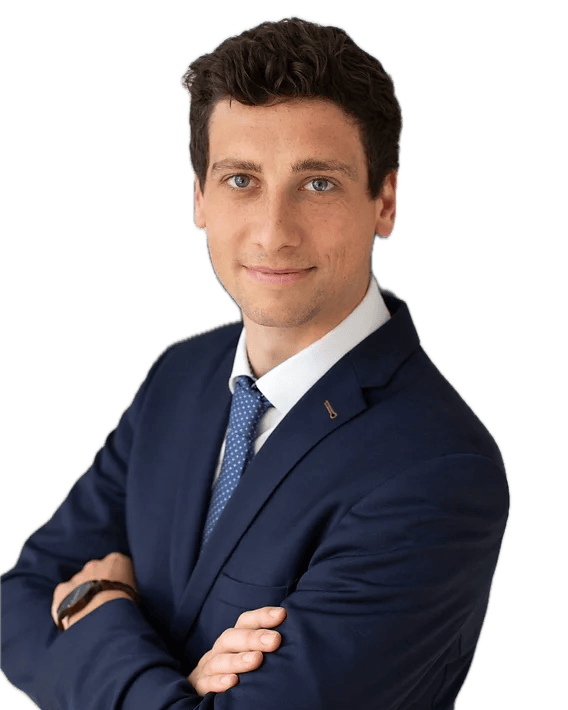
Partner · STEM Practice Group
Your contact in Munich

Partner · STEM Practice Group
Your contact in Munich

Partner · U.S. STEM Practice Group
U.S. Team in New York

Partner · U.S. STEM Practice Group
U.S. Team in New York
Frequently Asked Questions
When a PCT application enters the U.S. national phase, it is necessary to review deadlines, translations, formal requirements, and the claims strategy. The appropriate adjustments depend on the international application and the objectives for the U.S. market.
An office action is a notice from the USPTO in which the examiner raises formal or substantive objections to the application. The response must address the issues raised within the applicable guidelines.
It may be helpful to speak with the examiner if technical differences, changes to the claims, or the interpretation of an objection can be discussed efficiently. The decision depends on the status of the case file.
They make it possible to pursue additional or narrowed claims based on a prior application. Whether this makes strategic sense depends on the disclosure, the portfolio, and the status of the proceedings.
An FTO analysis examines, within a defined scope, whether a product or process could be affected by relevant third-party rights. It does not replace a general warranty and must be tailored to the market, the product, and the specific issue at hand.
Additional Information

What is a USPTO Office Action?

What is the PTAB
patent granting procedures in the USA
Intellectual Property
Consulting on patents and other intellectual property rights.
U.S. Business Law
German-language consulting services for projects in the United States.
USPTO Practice
Pearl Cohen's international U.S. patent practice.
 German
  English (United States)
  English (UK)